
Spotted on Toronto Island – renovations to this old ice cream cart make this one of the “coolest” (smiley face) mobility devices I’ve seen in awhile!
Spotted on Toronto Island – renovations to this old ice cream cart make this one of the “coolest” (smiley face) mobility devices I’ve seen in awhile!
Imagine arriving at a location labeled as ‘accessible’, only to discover there’s a step or ridge leading to the front door obstructing your entry. Unfortunately, this situation is all too familiar to people with disabilities.
Tackling this problem head on is Ryerson student Maayan Ziv.

Watch her interview with GlobalTV to see her talk about this great initiative by clicking this photo.
Maayan used her expertise in Digital Media to create an app that allows users to browse an interactive map to discover accessible places around the world. The mobile app, AccessNow, uses crowdsourcing (like Wikipedia) to collect information and rate locations based on people’s accessibility requirements. Locations are marked with colour-coded pins to show the degree of accessibility ranging from accessible, partially accessible, patio access only, and not accessible at all.
Maayan is passionate about creating a more accessible world and this app is a huge step in the right direction!
Filed under Accessibility, Barriers, Inspirational, invention, News, Posts
In 2013 I wrote a post about personalized prosthetics, where occupational therapist Christina Stephens designed and built her own Lego leg. Lego’s most recent contribution to the toy world is making a huge impact around the globe.
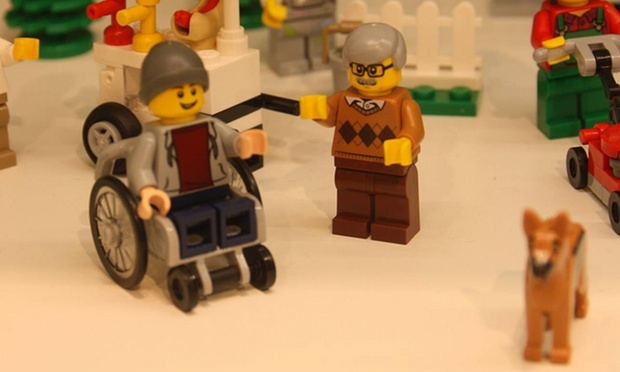
At the end of January, Lego unveiled its first minifigure using a mobility device at the Nuremberg toy fair. The one inch tall plastic figure is a part of a “Fun in the Park” set, which will be available for purchase in June, and is the first of its kind (despite having produced approximately 600 billion Lego pieces to date).
Though only one inch tall, this minifigure sends a commanding message of inclusion and has the power to influence our cultural perceptions, which is why Lego fans, parents, and disability groups are celebrating. It may have taken over 60 years to get here and he’s just a little dude, still this represents something much BIGGER!
Read more here.
Filed under Inspirational, News, Posts, Recreation, Wheelchairs

Meet Justin Anderson.
This Iraq war veteran is giving back to his community in an incredible way. After coming up with the clever idea of attaching a snow blade onto his wheelchair, Justin hit the nearby streets to help make the sidewalks safer for his neighbourhood during the winter.
“I had about half a dozen people stop me and ask if they could take a picture because they had never seen … a chair like this before.”
What’s particularly awesome about his pimped out ride is the way that it challenges other people’s typical perceptions of individuals using mobility aids and devices. Instead of Justin being dependent on others, the members of his community become dependent on him to perform this service. Way to go!
Filed under Accessibility, Design, Inspirational, Personal Stories, personalizing, Posts, Videos, Wheelchairs
“I don’t dress to be stared at. I dress for myself.” – Iris Apfel

Meet Iris Apfel.
Iris is a highly successful and eccentric 94-year-young American businesswoman, interior designer, and fashion icon who has recently gained celebrity fame. Iris is also the founder of Old World Weavers, a textile company that she launched with her late husband Carl Apfel. Through their textile business, they travelled around the world and participated in unique design restoration processes, including work on the White House for several presidents. Her bold approach to layering big jewelry and her oversized round glasses make a lasting iconic impression that landed her a star role in a documentary by Albert Maysles about her incredible life and career.
I recently watched this delightful documentary – Iris – which included several segments of Iris using mobility devices including a cane, walker and wheelchair.
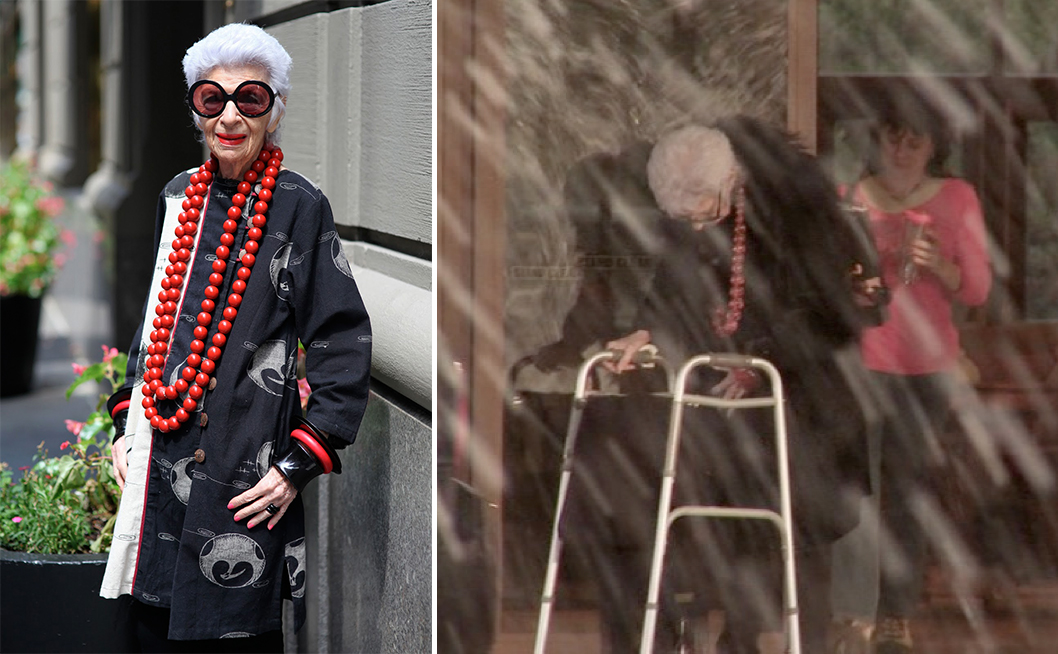

What struck me immediately when viewing these segments was the stark contrast between Iris’s ‘over the top’ accessorizing – on herself, her house and even her husband and the mobility aids that were left completely untouched! Not a splash of colour, not a jewel or bead, nothing… I have to admit I was disappointed… and couldn’t help thinking, “REALLY?! IRIS?!! You of all the people would have the know how to “pimp your ride”!
Unconsidered OR Unacceptable?
I believe one of two things are going on here. Either,
“There’s no how-to road map to style. It’s about self-expression and, above all, attitude.” – Iris Apfel
Filed under Art, Mobility Aids, personalizing, Posts
Every two years, a major contemporary art exhibition – The Venice Biennale – takes place in Venice, Italy with specific events for art, contemporary dance, architecture, cinema and theatre. At this year’s exhibition, one artist’s extraordinary work re-created a traditional assistive device using razor blades. Tayeba Begum Lipi, born in Gaibandha, Bangladesh, is known for creating paintings, prints, videos, and sculptures that articulate themes of female marginality and the female body. While many of her sculptural works purposefully use unexpected materials to speak primarily to the violence facing women in Bangladesh, her razor blade wheelchairs showcased at this year’s Biennale inspire an view on disability.

This piece – simultaneously beautiful and dangerous – reflects the challenges those with disabilities face daily in a world that continues to embrace ableist assumptions and beliefs. Looking at the detail of the piece I feel its message… when our society marginalizes people with disabilities, it perpetuates a kind of slow violence that will ultimately, destroy us all ~ as Emma Lazarus explains “Until we are all free, none of us are free”.
Filed under Art, Mobility Aids, News, Posts, Wheelchairs
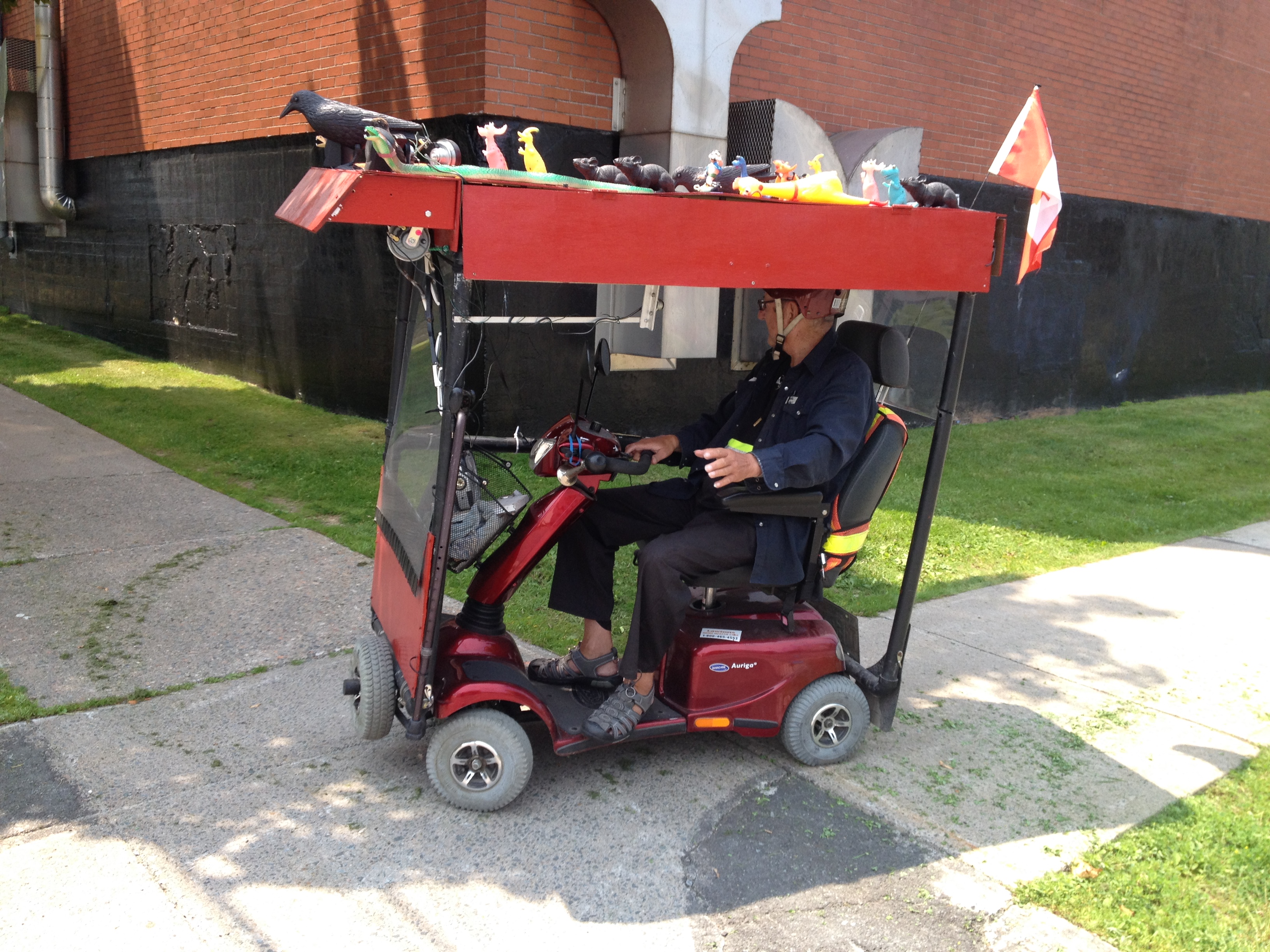
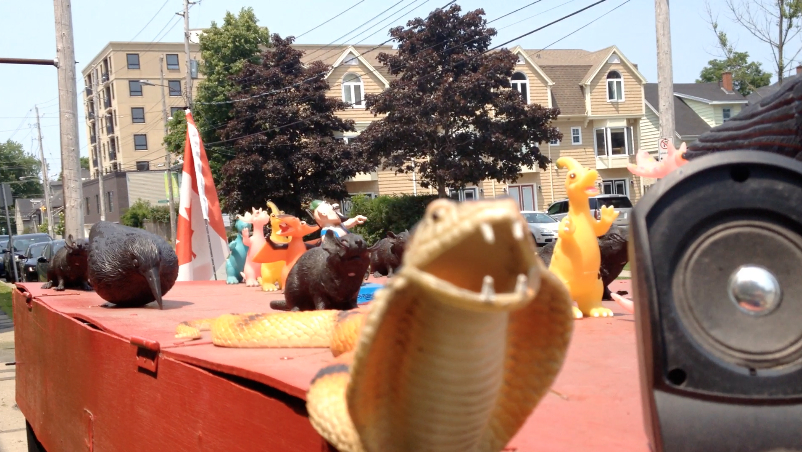
Fred built and painted this frame for his scooter to keep him protected from the weather and to have a ‘stage’ to decorate with all the fun and colourful toys he buys from the dollar store. You’ll hear Fred coming because he’s also hooked up an awesome sound system and two horns on his ride.
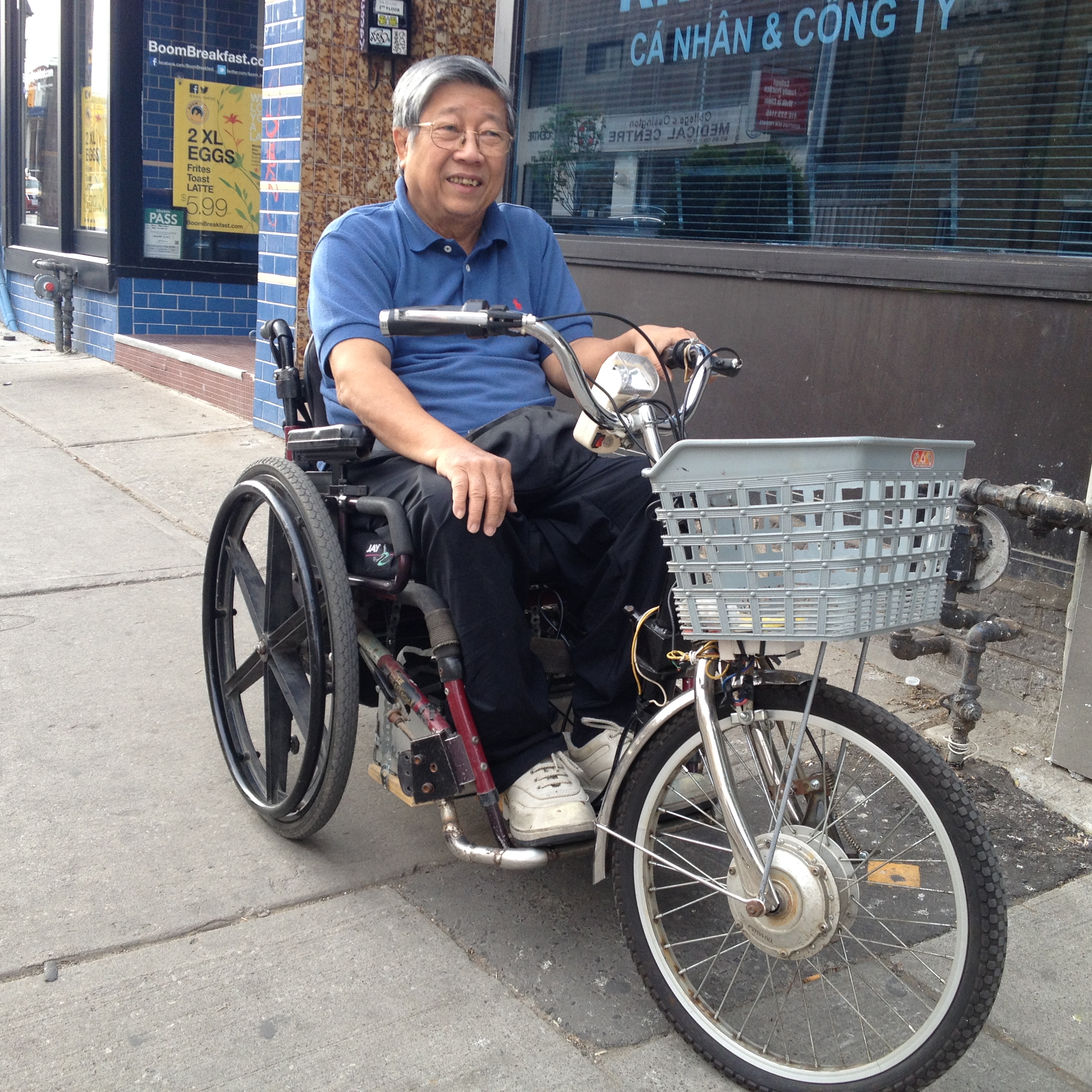
Hung Ho, a retired computer programmer, ingeniously reinvented his wheelchair! Equipped with a basket, welded bicycle tire, handlebars, and a headlight, Hung is cruising the city streets like no other.
Sara Hendren’s a ROCKSTAR! An artist, writer, activist, and design researcher – Sara creates and writes about adaptive and assistive technologies, prosthetics, inclusive design, and accessible architecture from a critical disability perspective. Her projects include the Accessible Icon Project a grassroots initiative that provides supplies and services to transform the original International Symbol of Access into this active, engaged image –
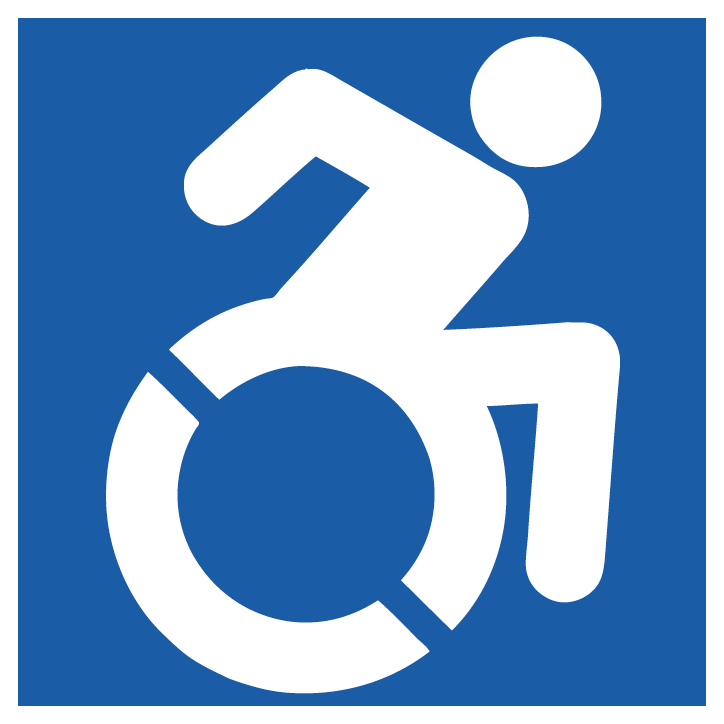
In an interview with the Atlantic, Sara explains why we need to stop using the terminology ASSISTIVE technology and instead call “adaptive devices” what they are – TECHNOLOGY –
“Scholars and people who are activists for disability rights have spent a lot of energy in the last decades showing that disability is not about the state of a human body; it’s about the built environment, structures, and institutions that make life possible and meaningful—or conversely, impossible and meager—for certain kinds of bodies and minds. In other words, disability studies has worked to transition an understanding of disability from a “medical model” to a “social model.” A social model of disability opens up the discussion to consider how design and technologies might be re-imagined for all kinds of bodies, not “assigned” to those with medicalized conditions.
By returning “assistive technology” to its rightful place as just “technology”—no more, no less—we start to understand that all bodies are getting assistance, all the time. And then design for everyone becomes much more interesting.”
Sara has a blog Abler where she tracks and comments on art, adaptive technologies and prosthetics, the future of human bodies in the built environment, and related ideas. She also runs works on lots of other cool projects including designing ramps for skateboarders and wheelchair users –
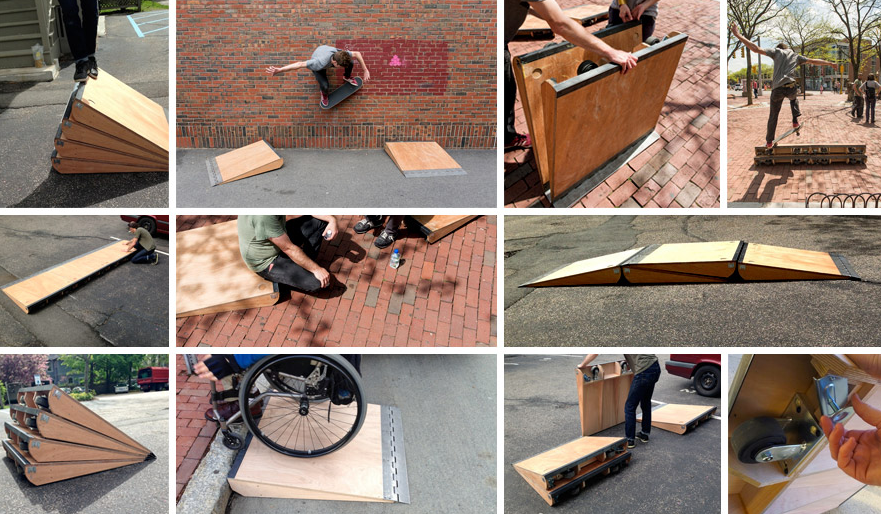
See what I mean? ROCKSTAR!
Filed under Accessibility, Articles, Barriers, Design, invention, Mobility Aids, Posts, Projects, Sports



 The Mobility Project